Add inspection
Dictate naturally“Hive 8, twelve over seven, queen seen…”
HiveIQ asksAny queen cells? How are stores?
Review inspection
Speak first, review second
HiveIQ structures the record, then asks about genuinely missing details.

HiveIQ is exploring AI tools for faster hive-inspection records, image-assisted observations and practical prompts based on colony history.
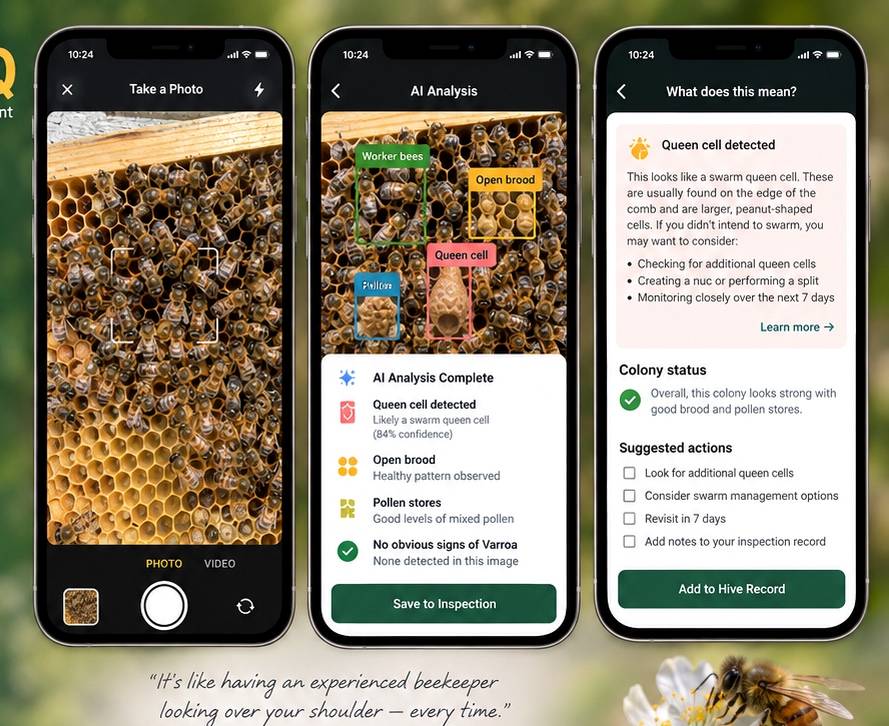
HiveIQ structures the record, then asks about genuinely missing details.
Suggestions remain suggestions until the beekeeper accepts them.
Useful prompts can become dated tasks without rewriting the inspection history.
Instead of tapping through a long form beside an open hive, the planned workflow is a large dictation box with a short list of things to cover. HiveIQ structures what it can, then asks only about missing or ambiguous information before the beekeeper reviews and saves the inspection.
Beekeepers may attach photographs to an inspection, including brood, queen cells, queens, comb condition or unusual symptoms. If a health condition is recorded, HiveIQ can prompt for a supporting image. Image analysis should be presented as assistance or a possible observation — not as an automatic disease diagnosis.
HiveIQ must distinguish between what the beekeeper observed and what the software inferred or recommended. A detected risk may create a proposed action, but the software should never turn a suggestion into a historical fact without beekeeper confirmation.
With a beekeeper's permission, apiary GPS can support mapping, navigation and relevant local context. Future location-aware features can provide useful local context while keeping precise apiary locations private by default.
Join the 2027 founding programme and help decide which AI tools are genuinely useful in an apiary.
Apply for a free 2027 season